

Folklore is education
It definitely is - how are we going to use it in modernity tho xx

I speak to Harry, a 21 year old artist that I consider to be a muse, who goes by the name Fallen Lemon. I got him to do a Q&A with me when I was asked to give an artist talk in Stockport, the new arts mecca of Greater Manchester. I named the event “Folklore is a Yankee Candle” in honour of his practice.
Harry embodies the term “blue raspberry” for me. He performs a piece with fellow musicians about finding a blue raspberry growing at the site of the battle of Naseby in 1645. There is a blue raspberry in a fish tank, incubated, at the front of the stage. A remnant from a better time where, a century later, John Clare would come to lament the land enclosures in his poem The Mores:
”Fence now meets fence in owners' little bounds,
Of field and meadow large as garden grounds,
In little parcels little minds to please,
With men and flocks imprisoned ill at ease.”
Before this, blue raspberries grew freely in the hedgerows, long before their eventual fate as the inspiration for sour candy hawked on TikTok Shop. I saw him perform at the FOLK night myself and artist Tanith Mab devised at the Carlton Club in Whalley Range, Manchester and I couldn’t believe it. The code to get into the car park at my flat was 1645. I whisper “Battle of Naseby” to myself when I punch it in. And now, manifesting in front of me, a young lad is introducing the audience to the Battle of Naseby. The coolest.
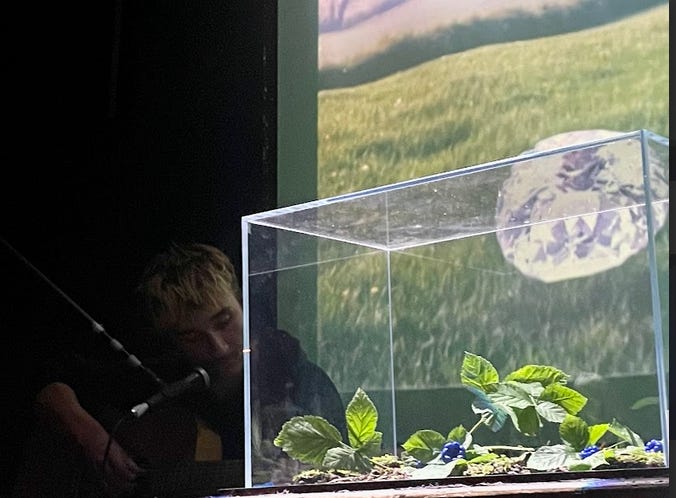
Harry uses the blue raspberry as a vehicle for his activism. Seeking to undermine the capitalist power of modern symbols and narratives and reclaim them as symbols of hope. Like a kid holding onto a Dr. Pepper bottle cap sentimentally. Oxymoronic and meaningful. True human spirit.
This is what “history from below” touted by academics of labour history does. It sends your mind on such a journey that you can’t help but learn. John Clare and blue raspberries. We’re not even 5 paragraphs in. Folklore is education, even if the folklore is tacky effigies of modern life.
Does the English school system work? When I do workshops in primary and secondary schools in the North West I see posters for 𝓑𝓻𝓲𝓽𝓲𝓼𝓱 𝓥𝓪𝓵𝓾𝓮𝓼 but does the school allow for folklore to be part of this? Wales incorporates folklore stories as part of their Welsh language learning. As 𝕰𝖓𝖌𝖑𝖎𝖘𝖍 𝖈𝖚𝖑𝖙𝖚𝖗𝖊 is co-opted by the far right, it’d help children to understand just what English culture is.
Once they’ve identified that in themselves they won’t fall prey to it’s being taken away rhetoric. You can’t take away the fact that I sing Lancashire dialect. Once you’re there other cultures don’t seem so scary because you have a standpoint for understanding them.
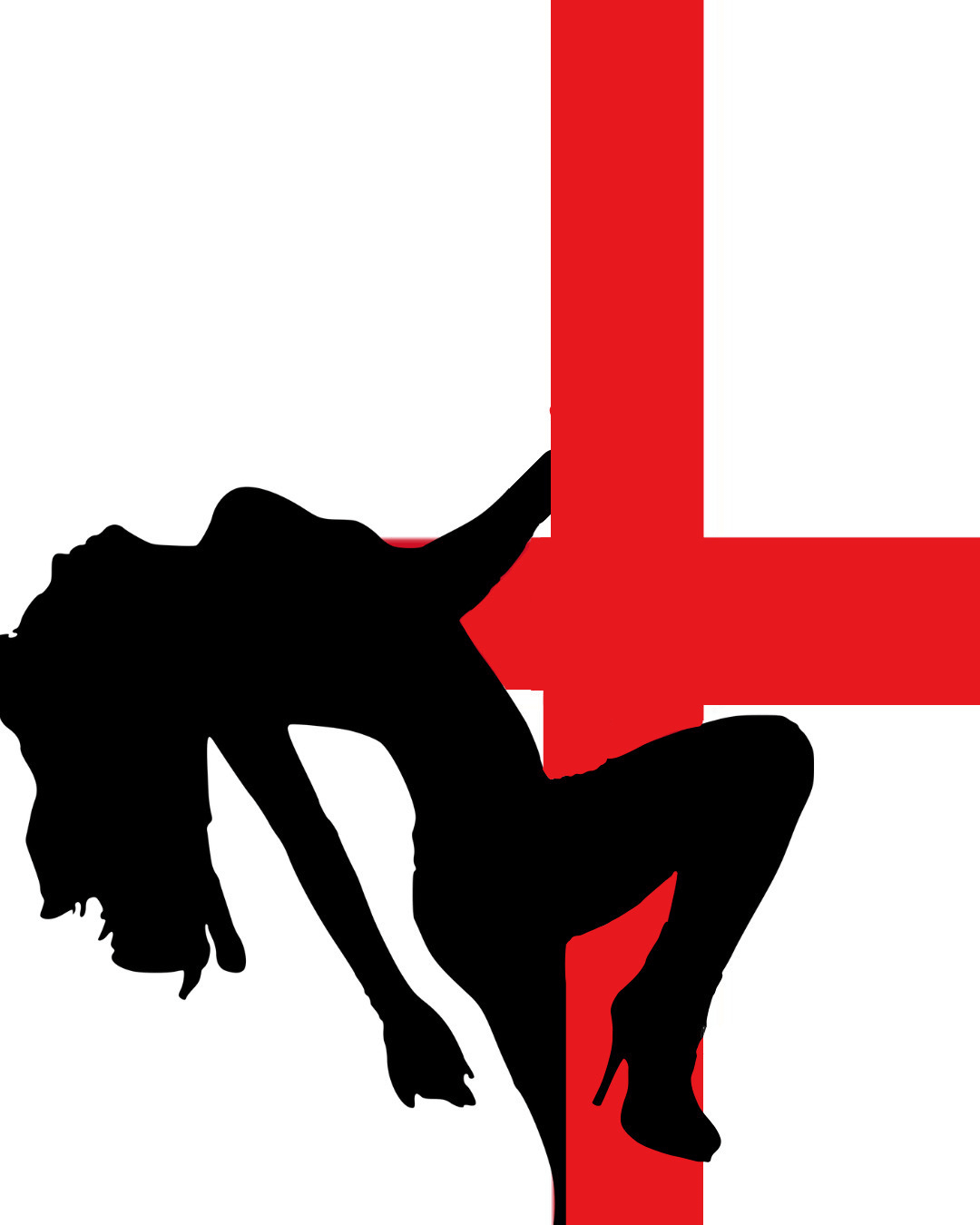
English culture is drenched in class politics. The flag is being weaponised.
Folk songs contain information, the ballads of 300 years ago are information transfer. There is use of the abortifacient herb, rue, in the ballad of Tam Lin. I learned most about the Cotton Famine of 1861-5 through the poetry published in local Burnley newspapers by William Cunliffe. This co-incided with the American Civil War and so I learned about that too. Print holds more power in cultural memory because it is in the physical world. King, in The Penguin History of New Zealand states that the point of the oral tradition is to transfer information, not communicate small domestic details. When resources or places change, the information drops out of the oral communication because it’s unneccessary to hold that information now.
The everyday living oral tradition communicates the information we need and if we write it down, great, and if we don’t then we stand to lose it but only when it ceases to be important. The problem is when information steps into the physical realm for me, that is when it can start to get mis-interpreted. The St. George’s flag is a symbol that is widely believed to unite, but pull on that thread to anyone and you’ll find theres many explanations for a universal symbol. This is the bastardisation of physical communication. From spoken word, to printed word, synthesized into a symbol that is shorthand to many people for many things. The meaning is lost.
If you feel like you can’ t trust the things you see and hear on the news, then you begin looking elsewhere for information. I’m sure having kids is the catalyst for the process in people my age. Long game self-radicalisation. I dig it! Post truth, so lets go back to lore. Oral information exchange, short publications on a practical topic - real spineless wonders like pamphlets and zines. Circulate it, like the freedom of the press in 1791.
Harry and I speak on Instagram about folklore as education. He says that the education system is probably the best we’ve ever had (thinking back to the workhouse) but then again it seems fundamentally broken. Modern life demands more than Bible study, being able to count pounds, shillings and pence and telling the time. Critical thinking is needed, as well as knowledge of environment. Herbalist hippies!! Get off my lawn!
We need to trust in a community that we feel a part of to be able to transfer information properly. Where is that community in this increasingly online world? Harry was able to buy sour blue raspberry candy from the US when he was a teenager because he was online. Cultural objects can be sent and recieved all around the globe thanks to the internet. We are so connected commercially and find it hard to connect locally. The concept of community is being sold back to us at the co-working space, for the price of a £6.50 coffee.
Love this. And now I’m thinking about The Road to Nab end and wondering if the songs from William Woodruff’s day made it through the 21st orally or had to be dug out of books. People lived and worked in each others pockets and I suppose the mills closing scattered people and their songs - so they were no longer localised.
OMG I just typed a paragraph and then accidentally deleted it because idk how to use substack :((((
What I was saying is that it's about focusing on the symbolic minutiae of everyday life, humans are constantly equipped with intellectual and spiritual skills that make us compelled to give meaning to the smallest things. Talking about yankee candles, go look at some of the reviews on YouTube from the big hitters in the candle community from back in the day - they treat them like fine wines, and the labels like artistic statements worthy of deep analysis! I was embarrassed by my involvement in this subculture where trivial consumer goods were treated like collectible art objects (check out my old account, @candlelover14 on instagram, yep I was really in it im not lying), but now I have enough distance to see that its beautiful and inspiring how we can give so much meaning and reverence to the tiniest most corporate and meaningless expressions, and this is what makes me think we have to pay special attention to the tiny signs and symbols around us that infiltrate our subconscious (this is where ur 'folklore is a jd bag' idea comes in), and yeah reclaiming that and turning it into something personal and powerful. what does that look like in practice though? I dont know. maybe just a certain mindfulness, maybe changing the way we treat people who are materialists / online shopping addicts (no shade, I am one too), maybe letting it influence the way we make art.
loads of my work atm is about tempering those two extreme sides of me - the epic side that deals with spirituality and massive profound feelings and ideas - and the tiny side that is obsessed with trivial things, and loves online shopping, and has that human impulse to make meaning out of nothingness. every time im writing a song I come across that icky feeling of "oh no, is this just nothing, or is this like everythinggggg" and that feeling of ick is like the point at which the two sides are colliding haha.
great post keep em coming !!!